Today in our staff meeting we selected one child that has made accelerated shift this year and highlighted how we used Learn Create Share to support this shift. Below is a brief "impact burst' about one of my children.
Showing posts with label 2017. Show all posts
Showing posts with label 2017. Show all posts
Monday, 6 November 2017

Thursday, 2 November 2017
The power of co-constructing the WALT
One of my significant takeaways from PD with Jo Knox was how she co-constructed the WALT with the children at the end of the lesson. The WALT was written in language the children used and could understand.
I have since done this with my maths groups and it is working a treat and has a number of benefits. By co-constructing the WALT the children are reflecting on their learning straight after the lesson and it has helped them cement the lesson content.
I have also seen higher levels of engagement when co-constructing the WALT. By not letting the cat out of the bag at the start of the lesson there is an element of the unknown. This unknown creates a level of curiosity within the children which leads to greater engagement.
Finally, it has empowered the children and given them greater agency over their learning which can only be a good thing right?
If you haven't done this with your class you should give it a whirl. At the very least it's nice to mix things up a bit for both you and your kids.
I have since done this with my maths groups and it is working a treat and has a number of benefits. By co-constructing the WALT the children are reflecting on their learning straight after the lesson and it has helped them cement the lesson content.
I have also seen higher levels of engagement when co-constructing the WALT. By not letting the cat out of the bag at the start of the lesson there is an element of the unknown. This unknown creates a level of curiosity within the children which leads to greater engagement.
Finally, it has empowered the children and given them greater agency over their learning which can only be a good thing right?
If you haven't done this with your class you should give it a whirl. At the very least it's nice to mix things up a bit for both you and your kids.
Thursday, 26 October 2017
Further PD with Jo Knox
Today Team 5 teachers had another PD session with Jo Knox. She modelled two lessons using our our kids. There was a lot of great stuff that I took away from the session. Below are some of my top takeaways/learnings.
Decipipes
Decipipes are an amazingly effective tool for teaching fractions and decimals. I had never used or seen them before but I will be from now on. Jo used the Decipipes in a number of ways from physically modelling a decimal number to adding decimal numbers to converting fractions into decimals. Decipepes were great for the kids to physically see how 1 can be split into tenths, hundredths and thousandths and how fractions can be converted into decimal numbers for example 1/8 into 0.125.
Share/Model/Record
Jo split the group into three smaller groups of 2s or 3s and got them to complete a task. When the smaller groups shared back to the larger group she got the two other smaller groups to either model with the materials what was being said or to record what was said on paper. This was a really effective way of getting the others in the group not to switch and to hone in on what was being said.
Co constructing the WALT at the end of the lesson
Usually I start my lessons by highlighting to the children what we are trying to learn today. To my surprise Jo didn't do this. Instead she co-constructed it with the children after the lesson. She asked them what they were learning about today/what the focus was etc and when the children responded she recorded it in kids language e.g WALT add decimals by taking some from one number and add it to the other to make whole numbers. Clearly Jo had an idea about where she wanted to take the lesson however co-constructing it with the children after the fact made them reflect more on what they learnt and enabled student agency.


Decipipes
Decipipes are an amazingly effective tool for teaching fractions and decimals. I had never used or seen them before but I will be from now on. Jo used the Decipipes in a number of ways from physically modelling a decimal number to adding decimal numbers to converting fractions into decimals. Decipepes were great for the kids to physically see how 1 can be split into tenths, hundredths and thousandths and how fractions can be converted into decimal numbers for example 1/8 into 0.125.
Share/Model/Record
Jo split the group into three smaller groups of 2s or 3s and got them to complete a task. When the smaller groups shared back to the larger group she got the two other smaller groups to either model with the materials what was being said or to record what was said on paper. This was a really effective way of getting the others in the group not to switch and to hone in on what was being said.
Co constructing the WALT at the end of the lesson
Usually I start my lessons by highlighting to the children what we are trying to learn today. To my surprise Jo didn't do this. Instead she co-constructed it with the children after the lesson. She asked them what they were learning about today/what the focus was etc and when the children responded she recorded it in kids language e.g WALT add decimals by taking some from one number and add it to the other to make whole numbers. Clearly Jo had an idea about where she wanted to take the lesson however co-constructing it with the children after the fact made them reflect more on what they learnt and enabled student agency.


Tuesday, 17 October 2017
Term 4 is here!
It's crunch time! In two weeks time we will be starting our final round of testing and I'll be able to see how much progress my kids have made and how effective my teaching has been. In order to prepare my kids for their tests I won't be covering anything new but I'll be consolidating what we have covered this year. Hopefully in consolidating their knowledge and strategies any small gaps or misconceptions can be addressed.
Post testing I will again be looking at fraction and decimal knowledge as this is an area that needs further development for my kids. We will be looking at converting fractions into decimal numbers and adding/subtracting decimal numbers.
Wednesday, 27 September 2017
Perfect Punch - Ratio Lesson
The learning intention for this lesson was to solve word problems involving decimals and to justify your thinking. The video shows snippets of the whole teaching process from the introduction of the problem to the children explaining their thinking to the class. Check out the full lesson plan and child generated content here.
An interesting issue that arose was the children didn't read the question properly. The question asked was, 'How much of each drink would Jack need to make punch for 30 people' but the children read it as, 'How many batches of punch does Jack need to make to serve 30 people'. Once the error was highlighted they were able to join the dots and do the maths but the problem was they didn't realise the error themselves. This is a common issue for our kids, they struggle to understand either the vocabulary in the word problem or knowing what it is asking them which then has a detrimental effect on their maths. My next steps involves unpacking the word problems with the children and guiding them to make sure they fully understand the problem before proceeding with solving it.
An interesting issue that arose was the children didn't read the question properly. The question asked was, 'How much of each drink would Jack need to make punch for 30 people' but the children read it as, 'How many batches of punch does Jack need to make to serve 30 people'. Once the error was highlighted they were able to join the dots and do the maths but the problem was they didn't realise the error themselves. This is a common issue for our kids, they struggle to understand either the vocabulary in the word problem or knowing what it is asking them which then has a detrimental effect on their maths. My next steps involves unpacking the word problems with the children and guiding them to make sure they fully understand the problem before proceeding with solving it.
Wednesday, 6 September 2017
Maths Vocabulary Retention
A common trend I'm seeing in maths but also other learning areas is that my kids are struggling to retain new vocabulary. It is evident form conversations with other teachers from within our school and cluster that this issue is wide spread.
An example of this was when looking at area and perimeter no child could tell me what either were, however, I knew last year I had covered it with half of them. The kids recognised the words but were unable to explain what they meant or were. Once I explained what each word meant many said things like, "Oh yeah that's right we did this last year" etc. Unfortunately this is not an isolated issue. The kids recognise vocabulary but cannot connect to it's meaning/definition. As a teacher seeing children get questions wrong in tests because they don't connect with the language even though you know it has been covered is really frustrating.
So this begs the question: What can I do to help my kids retain new vocabulary? How do I make it real for them? How do I help them make connections between the words and their meaning?
Wednesday, 23 August 2017
A challenge with create tasks
This term my maths class has been studying measurement. This lesson involved the children estimating and measuring distances then comparing the difference between them. It aligns with my CoL inquiry as it has a hands on/materials and a create element to the lesson. Being a hands on and a create based task made for high student engagement which was great to see. Unfortunately high engagement doesn't always mean learning. One challenge I find with create activities is the children get so caught up in the create aspect of the task and neglect the actual content of what they are creating. Often leading to videos with mathematical examples that are not accurate or clear.
This was a Google Class OnAir episode. For a full lesson plan, reflection and examples of the children completed activities please go here.
This was a Google Class OnAir episode. For a full lesson plan, reflection and examples of the children completed activities please go here.
Sunday, 13 August 2017
New target students
Initially I didn't have a target group for my COL inquiry into raising the achievement levels of my kids in maths. I was looking at my whole maths class as a target group. However, as I'm sure many of you would agree, this was a very ambitious (maybe even dumb) move on my behalf. I have found targeting the whole class makes it very difficult to track any progress which in turn makes it tricky to know if what I am doing is worthwhile/effective or not. With this in mind I now have a target group for my inquiry. These children are below where they should be and also happen to be my maths target group. Below is a table of their data.

I will be working with and tracking these beautiful's achievement over the next two terms.

I will be working with and tracking these beautiful's achievement over the next two terms.
Wednesday, 2 August 2017
Decimal Place Value - Jumping the gun
It has been so great to see my kids develop their decimal place value knowledge (and fraction knowledge) by using materials. This has concretised it for them and helped them connect with the knowledge. Having had success with this I thought great they've got it and I gave them an activity that would see them solving addition and subtraction problems that includes tenths and hundredths...without using materials.
This was an epic fail on my behalf. In my excitement I jumped from using materials straight to using number properties totally by passing imaging. As you can imagine the kids found this too hard (although some managed). We ended up working through the problems altogether in their group in order to complete it. I learnt a valuable lesson. Wishing and hoping my kids will get something doesn't work. I need scaffold the next steps more effectively in order to get further growth. Lesson learned.
This was an epic fail on my behalf. In my excitement I jumped from using materials straight to using number properties totally by passing imaging. As you can imagine the kids found this too hard (although some managed). We ended up working through the problems altogether in their group in order to complete it. I learnt a valuable lesson. Wishing and hoping my kids will get something doesn't work. I need scaffold the next steps more effectively in order to get further growth. Lesson learned.
Book Da Teacher Update
Back in June I initiated Book Da Teacher. This is a system where the children can book in time with me one on one or in groups of up to three to work through something they are struggling with or want help with. This came about after data I received from a student survey that indicated the children would like more time with me to help them with their maths.
Initially Book Da Teacher got off to a rocky start as none of the children booked in. After some clarification about it soon a trickle of booking started coming through. However, now in Term 3, one and half months on Book Da Teacher is still struggling to take off. Week two, term three and I have no bookings despite my best efforts to remind the children about it. This makes me think that maybe the data was wrong and the children don't really want more teacher time or I need to scaffold the system more so the children feel confident about using it. I suspect the latter is more likely.
Going forward I will be endeavouring to scaffold Book Da Teacher discussing it daily with the children and booking them in myself. My hope is that this will get the ball rolling. If you have any ideas please let me know.
Initially Book Da Teacher got off to a rocky start as none of the children booked in. After some clarification about it soon a trickle of booking started coming through. However, now in Term 3, one and half months on Book Da Teacher is still struggling to take off. Week two, term three and I have no bookings despite my best efforts to remind the children about it. This makes me think that maybe the data was wrong and the children don't really want more teacher time or I need to scaffold the system more so the children feel confident about using it. I suspect the latter is more likely.
Going forward I will be endeavouring to scaffold Book Da Teacher discussing it daily with the children and booking them in myself. My hope is that this will get the ball rolling. If you have any ideas please let me know.
Friday, 7 July 2017
Fraction Challenge - Google Class OnAir episode
The learning intentions for this lesson was to participate 100% as a member of a group and to visually represent a fraction of a whole. I chose this create lesson/activity as a way of concretising my kids fraction knowledge. Click here to go to my Manaiakalani Class On Air site where you will find a detailed lesson plan, a reflection of the lesson and an example the the kids final product.
This lesson highlighted to me how effective create lessons are in engaging the children. I was delighted to see one boy who struggles with maths and often disengages really light up when doing this activity. It was the first time I had seen him genuinely engage in a maths activity.
This lesson highlighted to me how effective create lessons are in engaging the children. I was delighted to see one boy who struggles with maths and often disengages really light up when doing this activity. It was the first time I had seen him genuinely engage in a maths activity.
Friday, 16 June 2017
Book Da Teacher
As a part of my inquiry scan I asked my children via a google form: "Is there anything your maths teacher could do to help you improve more in maths? If so what?
20 children responded to the survey question but only 7 answered the question in it's entirety. The others opted to simply answer yes or no without explaining what I could do to help. Out of the 7 who responded in full 4 of them said something along the lines of "spending more time with the teacher". This surprised me as the introduction of the maths tumble meant I was seeing each group regularly. I asked those four children to elaborate on what the wanted and they all mentioned they wanted one on one or smaller group time with me. As it turned out when I asked the class to close their eyes and raise their hand if they would like to have more teacher time in a smaller group setting 4/5 of them raised their hand.
With 20 kids indicating they would like more time with me to help them in their maths learning I have initiated 'Book da teacher'. The children can book in a 10 minute time slot with me using a google sheet via our team's website. The 2 conditions are: A maximum of 3 people per session and the children must come to the session with something to work on or a problem.


'Book da teacher' is now in it's second week of running. To my surprise in the first 2 days no one booked in. When I questioned the kids about what was going on it turned out they were confused as to what they should come to me with. After some further elaboration the booking sheet started to fill up. It is still early days but I am hoping that this initiative will be a small step towards lifting the maths achievement of my kids.
20 children responded to the survey question but only 7 answered the question in it's entirety. The others opted to simply answer yes or no without explaining what I could do to help. Out of the 7 who responded in full 4 of them said something along the lines of "spending more time with the teacher". This surprised me as the introduction of the maths tumble meant I was seeing each group regularly. I asked those four children to elaborate on what the wanted and they all mentioned they wanted one on one or smaller group time with me. As it turned out when I asked the class to close their eyes and raise their hand if they would like to have more teacher time in a smaller group setting 4/5 of them raised their hand.
With 20 kids indicating they would like more time with me to help them in their maths learning I have initiated 'Book da teacher'. The children can book in a 10 minute time slot with me using a google sheet via our team's website. The 2 conditions are: A maximum of 3 people per session and the children must come to the session with something to work on or a problem.


'Book da teacher' is now in it's second week of running. To my surprise in the first 2 days no one booked in. When I questioned the kids about what was going on it turned out they were confused as to what they should come to me with. After some further elaboration the booking sheet started to fill up. It is still early days but I am hoping that this initiative will be a small step towards lifting the maths achievement of my kids.
Tuesday, 6 June 2017
Defining success
I just finished watching a video of Graeme Aitken who presented to the Manaiakalani school leaders about collaboration and teaching as inquiry. His presentation was full of wisdom and he had a great way of explaining things so that even the simplest of teachers (myself included) could understand.
Graeme stated that as teacher's we are only trying to achieve 3 things:
1 - More interest/enjoyment of learning
2 - More confident children
3 - More achievement success
While I agree (as I'm sure the Ministry of Education (MOE) and many others do) with these three goals I think the education sector has a long way to go in regards to recognising all of them. In my opinion there is greater weighting to goal number three. At the end of the year I'm not reporting to senior management or the MOE about the interest/enjoyment levels of my children or how confident they are. I'm reporting back on their achievement levels. As a teacher I really want to have children who are interested in/enjoying learning and children who are growing in confidence however it's really easy to focus solely their achievement levels as this seems to be what matters most and what defines success.
Listening to Graeme was a great reminder for me to not forget about goals one & two. Graeme said real success is when you get an intersection of the three goals. When you get children who are interested, confident and achieving. I really like this definition of success and it is one I will be adopting. While it's not an easy task it takes into account the wellbeing of the children which can only be a good thing right?
Graeme stated that as teacher's we are only trying to achieve 3 things:
1 - More interest/enjoyment of learning
2 - More confident children
3 - More achievement success
While I agree (as I'm sure the Ministry of Education (MOE) and many others do) with these three goals I think the education sector has a long way to go in regards to recognising all of them. In my opinion there is greater weighting to goal number three. At the end of the year I'm not reporting to senior management or the MOE about the interest/enjoyment levels of my children or how confident they are. I'm reporting back on their achievement levels. As a teacher I really want to have children who are interested in/enjoying learning and children who are growing in confidence however it's really easy to focus solely their achievement levels as this seems to be what matters most and what defines success.
Listening to Graeme was a great reminder for me to not forget about goals one & two. Graeme said real success is when you get an intersection of the three goals. When you get children who are interested, confident and achieving. I really like this definition of success and it is one I will be adopting. While it's not an easy task it takes into account the wellbeing of the children which can only be a good thing right?
Tuesday, 30 May 2017
Decimal Place Value - Popsicle Decimals - Google Class OnAir episode
Below is a video and reflection of a place value lesson I recently did with my children. As mentioned in an earlier post I was challenged to use materials as a way of building the children's decimal place value knowledge. This was my first attempt. To see examples of the children's finished work please go to my Class OnAir site.
Reflection
I found this lesson a bit of a struggle. Some of the children were reluctant to engage, maybe because they thought they were beyond this however evidence from their classwork and GLOSS test indicates otherwise. This lesson highlighted to me how important materials are for teaching decimal place value. With using materials the children quickly latched onto the idea that 1 popsicle stick represented 1/10 so 3 popsicle sticks represented 3/10 and so on. It also made it easier for them to add decimals together. The next steps involve removing the scaffolds and getting the children to work with tenths without the popsicle sticks
Reflection
I found this lesson a bit of a struggle. Some of the children were reluctant to engage, maybe because they thought they were beyond this however evidence from their classwork and GLOSS test indicates otherwise. This lesson highlighted to me how important materials are for teaching decimal place value. With using materials the children quickly latched onto the idea that 1 popsicle stick represented 1/10 so 3 popsicle sticks represented 3/10 and so on. It also made it easier for them to add decimals together. The next steps involve removing the scaffolds and getting the children to work with tenths without the popsicle sticks
Monday, 22 May 2017
Decimal place value knowledge - Materials, materials, materials!
Last week our team was fortunate enough to have a tailored session with Jo Knox about about assessing and teaching maths in Year 7 & 8. While the whole session was very useful the part I found most helpful was Jo's take on teaching decimal place value knowledge.
For my CoL inquiry I'm inquiring into how I can significantly develop the math knowledge of my children. This term I am focussing on developing their decimal place value knowledge.
When I asked Jo how she goes about teaching decimal place value her response was 'Materials, materials, materials' She said using materials such as decipipes, decimats, chocolate bars and bundles of 10 ice block sticks are imperative in developing conceptual decimal understanding.


The idea of using materials to develop decimal knowledge is also supported by NZ Maths which states "In developing an understanding of decimal numbers and their relative size, it is important that the students themselves use equipment to create a range of physical representations of numbers". With this in mind I will be endeavouring to create rich learning experiences using materials. I hypothesis that this combined with rich create activities will develop my children's knowledge of decimal place value and other mathematical concepts. I'll keep you posted on how I get on.
For my CoL inquiry I'm inquiring into how I can significantly develop the math knowledge of my children. This term I am focussing on developing their decimal place value knowledge.
When I asked Jo how she goes about teaching decimal place value her response was 'Materials, materials, materials' She said using materials such as decipipes, decimats, chocolate bars and bundles of 10 ice block sticks are imperative in developing conceptual decimal understanding.


The idea of using materials to develop decimal knowledge is also supported by NZ Maths which states "In developing an understanding of decimal numbers and their relative size, it is important that the students themselves use equipment to create a range of physical representations of numbers". With this in mind I will be endeavouring to create rich learning experiences using materials. I hypothesis that this combined with rich create activities will develop my children's knowledge of decimal place value and other mathematical concepts. I'll keep you posted on how I get on.
Friday, 19 May 2017
New focus and hypothesis: Decimal Place Value
As mentioned in earlier posts my COL inquiry focus is looking at how can I improve my kids mathematical number knowledge using the Learn Create Share pedagogy? In previous months I was looking at increasing my kids times tables knowledge. My focus is now shifting to their knowledge of decimal place value. At Year 7 & 8 the children should be able to add and subtract numbers up to 2 decimal places. Evidence from classwork and conversations with the children highlighted general gaps in or misconceptions about their decimal place value knowledge. For instance:
Adding tenths to the hundredths column.
3.12 + 9.4 = 12.16
I hypothesise this comes from viewing decimal numbers as whole numbers i.e 12 hundredths as 12 and lack of understanding of the base 10 system. I will be looking at ways to address these misconceptions and place value knowledge gaps.
Adding tenths to the hundredths column.
3.12 + 9.4 = 12.16
I hypothesise this comes from viewing decimal numbers as whole numbers i.e 12 hundredths as 12 and lack of understanding of the base 10 system. I will be looking at ways to address these misconceptions and place value knowledge gaps.
Thursday, 18 May 2017
Hearing from the children.
In order to better support my maths children in their learning I wanted to find out more about their own level of mathematics confidence and how much support they receive from home. Below is some of the data from a survey given to the children.

1 - I don't enjoy it at all 5 - I love learning maths at school
This result surprised me. I assumed that most of the responses would have been around 2 & 3. It is encouraging to see that most of the class do enjoy learning maths at school. Further investigation will be needed to find out what I can do to help the 2 students who don't enjoy learning maths at school.
.

1 - Not confident 5 - Very confident
Again these results surprised me. It was encouraging to see that 38% had some confidence in their maths ability and it was pleasing to see that none of the children had no confidence.


Interestingly while 65% of the children could think of two adults in their life who had encouraged and supported them in maths only 42% said they get help with their maths from anyone at home. On further investigation for most of those children who indicated 2 adults support them in maths, one of those adults was a teacher.
There are a lot of takeaways from this data. I am yet to work out how this data will affect my teaching and lessons however it has given me much to think about.

1 - I don't enjoy it at all 5 - I love learning maths at school
This result surprised me. I assumed that most of the responses would have been around 2 & 3. It is encouraging to see that most of the class do enjoy learning maths at school. Further investigation will be needed to find out what I can do to help the 2 students who don't enjoy learning maths at school.
.

1 - Not confident 5 - Very confident
Again these results surprised me. It was encouraging to see that 38% had some confidence in their maths ability and it was pleasing to see that none of the children had no confidence.

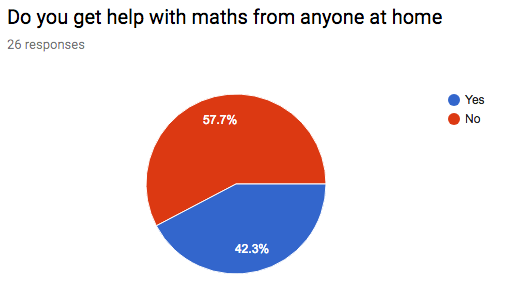
Interestingly while 65% of the children could think of two adults in their life who had encouraged and supported them in maths only 42% said they get help with their maths from anyone at home. On further investigation for most of those children who indicated 2 adults support them in maths, one of those adults was a teacher.
There are a lot of takeaways from this data. I am yet to work out how this data will affect my teaching and lessons however it has given me much to think about.
Wednesday, 10 May 2017
Maths PD with Jo Knox
Today we had Jo Knox taking us for Maths PD. These are notes taken from my colleague Hayley Judd who kindly shared them with me and allowed me to post them.
The objectives of the PD were to
- Identify clear links between Number framework with national curriculum levels and National standards
- Know how to use assessment data
Knowledge and strategies intertwine.
Knowledge:
Number Id
Number sequence and order
Grouping and place value
IKAN is a tool to assess knowledge
Strategy:
Add/sub
Mult/Div
prop/ratios
GLOSS is a toll to assess strategy
"The primary purpose of assessment is to improve students learning and teachers teaching as BOTH student and teacher respond to the information that it provides"
- How is this assessment informing our planning and teaching?
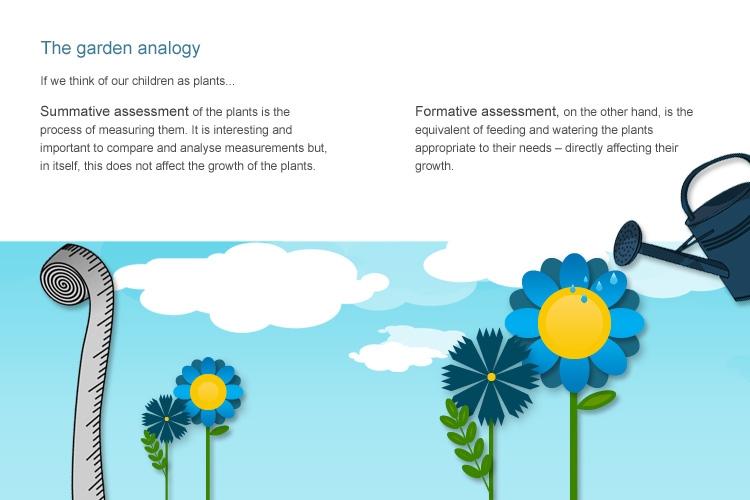
Formative or summative assessment?
Exploring Number Knowledge:
Numeral ID, Sequencing and Ordering, Grouping/ Place Value, Basic Facts:
Important pieces of information we should know instantly- or so the Ministry says. Jo disagrees, so took away the time limit on certain sections of the IKAN
Advantages: It is quick
Disadvantages: time pressure, chn have to look up and down, questions go too quick.
Reflection: Maybe IKAN is just to be used for specific chn to provide a snapshot
Maybe give chn to option to sit back with their marked test and they can fix up the ones they know (not wasting time learning what they know) and then pick two things they want to learn based on their mistakes.
Spider graphs for GLoSS and IKAN
These are great to show the glaring gaps, where students are aiming for, and their strengths. Be careful if the kids are working well below, as their lines will all be in the middle and might discourage them.
How do I use the data to inform my planning?
IKAN class summary sheet: shows gaps (highlighted)
Highlight all data, including names
Data: sort range: column d.
This will sort from lowest to highest stage. Will show some common gaps in knowledge that you can fill as the Teacher.
PAT tests:
Individual reports give stanine, where the children sit on the bell curve, black correct answers, light is incorrect, transparent is omitted. Red line is the average. The key will show you whether the test was too hard or too easy.
Below is the presentation that Jo went through when speaking to us.
Monday, 10 April 2017
Independent and dependent clauses - Google Class OnAir episode
The Video
There were two learning intentions for this lesson.
1) Identify independent and dependent clauses.
2) Identify the subject and the predicate
This lesson was precursor to a lesson on complex sentences. In order to understand complex sentences kids had to have a good understanding on independent and dependent clauses. The episode starts with the kids spotting the difference between two different clauses. This then leads into a whole class lesson about clauses in particular independent clauses. The video wraps up with footage of the children participating in the subject/predicate activity and also features children working on their presentations. Please visit my Google Class OnAir site for a detailed lesson plan, reflection and examples of the kids work.
There were two learning intentions for this lesson.
1) Identify independent and dependent clauses.
2) Identify the subject and the predicate
This lesson was precursor to a lesson on complex sentences. In order to understand complex sentences kids had to have a good understanding on independent and dependent clauses. The episode starts with the kids spotting the difference between two different clauses. This then leads into a whole class lesson about clauses in particular independent clauses. The video wraps up with footage of the children participating in the subject/predicate activity and also features children working on their presentations. Please visit my Google Class OnAir site for a detailed lesson plan, reflection and examples of the kids work.
Sunday, 9 April 2017
Multiplication inquiry reflection
Term 1 is almost over. It's been a long one but a good one. The post below contains information about my term 1 inquiry that we presented to our professional learning groups in staff meeting last week.
The Question
Evidence from IKANS test and conversations with the kids suggested they were lacking in their knowledge of multiplication basic facts. This got me thinking ‘How can I significantly improve my kids times tables knowledge within a learn, create, share pedagogy?’ Below are some of the strategies I tried and the results.
The Humble Tumble
I introduced a tumble to my maths program. This ensured each child got at least 20 minutes a day to work on the multiplication basic facts they needed to.
Basic facts station
The basic facts station included multiplication/division wheels where the kids would test themselves or play with a partner. It also included multiplication snap. Each child played a card then it was race to multiply the two numbers together. First person to say the correct answer won that pair of cards.
Multiplication songs
The kids could also watch and learn the multiplication songs we found on youtube. They had access to the 2 - 12 times tables songs through our class site.
Regular tests
To track progress, the kids were tested on their knowledge of the first 100 times tables basic facts

The Question
Evidence from IKANS test and conversations with the kids suggested they were lacking in their knowledge of multiplication basic facts. This got me thinking ‘How can I significantly improve my kids times tables knowledge within a learn, create, share pedagogy?’ Below are some of the strategies I tried and the results.
The Humble Tumble
I introduced a tumble to my maths program. This ensured each child got at least 20 minutes a day to work on the multiplication basic facts they needed to.
Basic facts station
The basic facts station included multiplication/division wheels where the kids would test themselves or play with a partner. It also included multiplication snap. Each child played a card then it was race to multiply the two numbers together. First person to say the correct answer won that pair of cards.
Multiplication songs
The kids could also watch and learn the multiplication songs we found on youtube. They had access to the 2 - 12 times tables songs through our class site.
Regular tests
To track progress, the kids were tested on their knowledge of the first 100 times tables basic facts
The results
This graph shows the amount of shift the kids made in their times table score from the start of February to the end of March

Reflection
Overall the inquiry was successful. The children made gains in their times tables knowledge and were generally engaged and wanting to learn them. I will be carrying on with the basic facts station into term 2 however I will be changing the activities to ensure the kids don’t get tired of them. The children who have a great understanding of times table 1-10 will be encouraged to learn the 12’s, 13’s and the division basic facts.
The basic facts station also promoted self monitoring which was great for the kids. At times it got a little messy when some kids went of task but after a word or three from myself they were back on track.
Subscribe to:
Posts (Atom)
-
Today marked the final day of the Manaiakalani Maths Intensive, with a focus on two key ideas: Creating and Sharing. Creating in Maths I’ve...
-
 As a part of my inquiry scan I asked my children via a google form: "Is there anything your maths teacher could do to help you improve ...
 -
Today's session was abut multiplicative thinking, fractions and decimals and measurement. I was particularly interested in using visual ...

